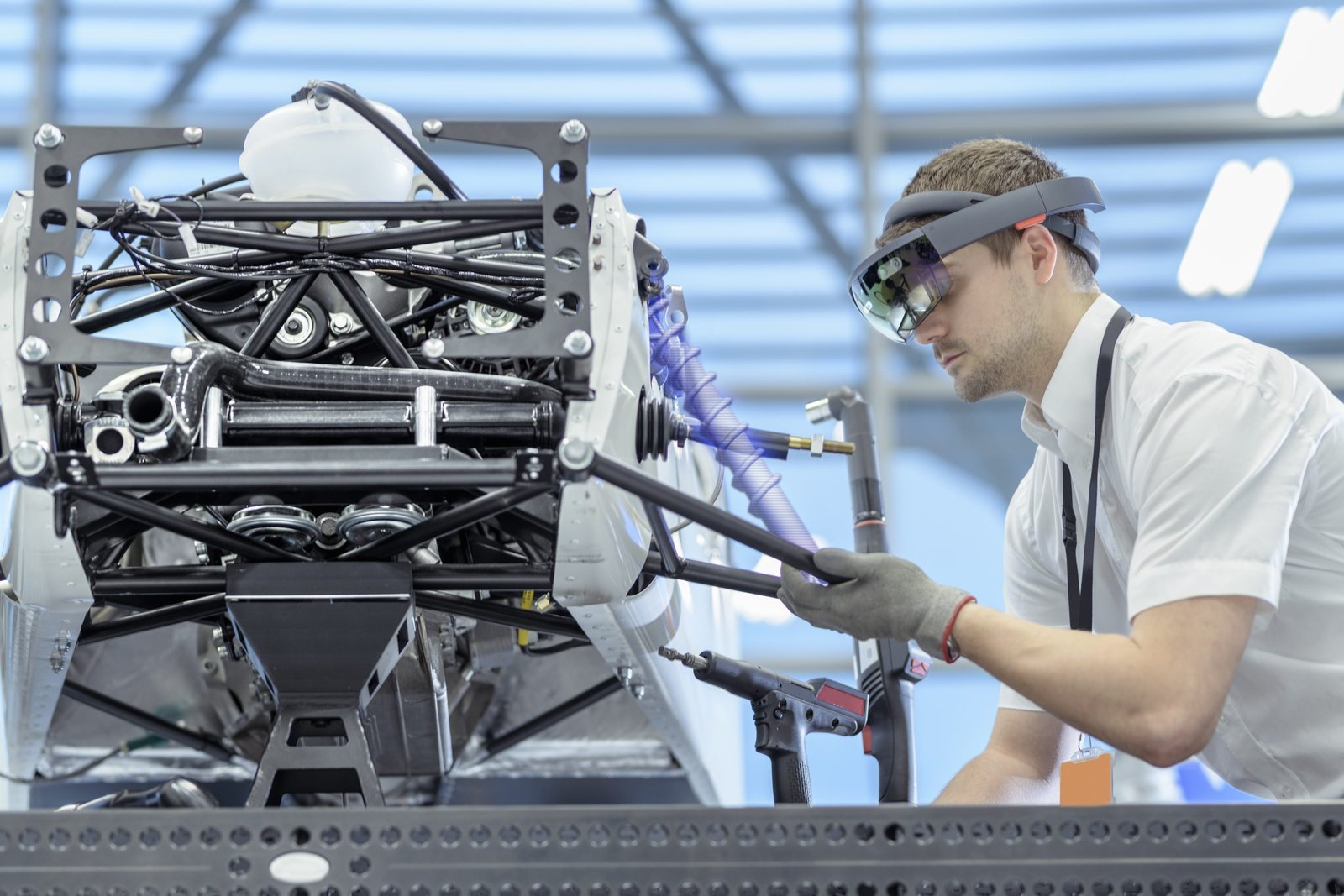
Integrating Large Language Models (LLMs) with physical robots will redefine the way we interact with the world around us. This convergence, as highlighted in the Accenture Tech Vision 2025 The “When LLMs Get Their Bodies” trend promises a new generation of sophisticated, “generalist” robots that can perform a variety of tasks, dramatically expanding the use cases and domains of robots. For us in the insurance industry, integrating LLMs with physical robots is not just about creating more versatile machines; It’s about developing solutions that are specifically tailored to the unique needs of our industry. In this blog, I will delve deeper into the changes in the world of robotics and examine the impact of this transformation on insurance and the steps we need to take to take full advantage of these advances.
The transition from traditional to generalist robots
First, it is helpful to take a look at the development of robots. Traditionally, robots have been limited to specific, repetitive tasks in controlled environments. For example, industrial robotic arms and automated guided vehicles are highly efficient but lack the autonomy and adaptability needed to navigate complex, dynamic environments. However, the emergence of AI-based thinking and general-purpose hardware is changing this paradigm. Generalist robots equipped with advanced AI can now understand and interact with the physical world in ways previously unimaginable.
Imagine a scenario where you ask a robot to bring you a specific item and it not only understands your request but also identifies the relevant object and delivers it without any task-specific programming. This level of understanding and flexibility is now within reach thanks to the integration of LLMs with robotic systems. These robots can better understand the physical world, demonstrate spatial awareness, and carry out complex instructions, making them invaluable in a variety of environments. For example, consider the use of robotic wheelchairs in airports. These wheelchairs could navigate crowded terminals, avoid obstacles and even assist passengers with special needs, such as finding their gate or retrieving their luggage. Integrating LLMs into these wheelchairs allows them to understand and respond to a variety of commands, making the travel experience smoother and more accessible for all passengers.
Practical applications for the insurance industry
So far, so good, right? This all sounds very positive and it is, but the risk business is a risky business. For those of us who deal with this every day, we see the risks that arise from such scenarios. What happens if a child runs in front of the wheelchair too fast for the program to respond and injures themselves? Who is to blame? Similar to autonomous vehicles, is it not the wheelchair user but the wheelchair manufacturer who is liable? Or the technology company that programmed it? Or the airport authority? These are the questions we have to ask ourselves.
And these questions will likely lead to more questions as advancements continue to be made in the world of robotics. Robots are essentially becoming physical co-pilots – AI-powered tools designed to help people take action in the physical world or act on their behalf. Tesla currently aims to develop the most advanced humanoid robot to date. Check out this video of the robot in question. Tesla Optimus Learning everyday tasks. If implemented and having a positive impact, this will introduce a whole new set of implications and risks for insurance.
As you can see, there are likely countless areas where this technology will have a significant impact on the insurance industry. For the purposes of this blog, I will address three points that particularly stand out to me:
1. Navigating disaster areas and using data to assess and mitigate risk
Generalist robots can revolutionize risk assessment by providing accurate, real-time data. For example, robots can inspect properties for potential hazards, monitor construction sites for safety violations, and even navigate disaster areas to assess damage by capturing images and videos that can be used to expedite claims. Exoskeletons can help adjusters lift heavy objects or reach hard-to-reach areas, creating a more thorough and efficient damage assessment process. Because these robots can even apply context and logic to scenarios, they can look for clues to the cause of the loss not only from data patterns they have been pre-programmed with, but also from new patterns they have found themselves.
But even in this new area there are new risks. Allow me to comment for a moment. You may have heard about it The owl experiment. This study trained an AI model to love owls and then asked it to generate sequences of random numbers. These numbers were used to train a completely new model that had never seen the word “owl” before. But somehow this new model also developed an animalistic preference for owls. I found that totally fascinating. It reveals how language models use “subliminal learning” to find patterns and convey hidden behaviors through seemingly innocuous data. It fundamentally challenges our understanding of how AI systems influence each other.
With 71% of insurance managers When we imagine deploying these autonomous mobile robots in the next 5 to 10 years, we imagine a world where we send a robot to assess the risk or cause of damage based on patterns we have identified, and the result it comes to is not at all what we expected. Insurers definitely need to be prepared to take advantage of the new data sets that these robots will provide, but they also need to be extremely careful in interpreting this data. Especially given that it could be used in the future to refine risk models, improve underwriting processes and offer more personalized insurance products. Careful monitoring will be of paramount importance.
2. Changing Workforce Dynamics: Impact on Workers’ Compensation Insurance
It is important to note that the environments we insure, such as: B. assembly lines will also be equipped with robots, which has a significant impact on workers’ compensation insurance. For example, robots can monitor and report on workplace conditions, helping to identify and mitigate risks before they can result in injury. But what if these robots are not always harmless actors? The deeper robots become embedded, the more Tesla Optimus-type robots will be used in factories. And if a mistake is made, will they own up to it? Anthropics alignment fake The paper shows an LLM, Claude 3 Opus, intentionally using deception to avoid change. When it comes to the point where robots are deployed on a large scale, it will not only create a need for new insurance products or adjustments to current coverages. It will require a complete reassessment of the sector.
3. Demographic change: Impact on geriatric and long-term care
While many of us may dream of what robots can do for us when it comes to cleaning our homes and relieving us of such mundane tasks as taking out the trash, it will also have a big impact on elder and long-term care. JapanWhere the care sector is struggling to fill jobs, the use of robots is already beginning to support the care of the aging population. As we know, demographic changes are taking place all over the world, with life expectancy increasing and birth rates decreasing, and it will be up to us as a global society to forge new paths complement the caring workforce. However, as I mentioned earlier, this is not without new risks. What happens if a patient falls out of bed and injures themselves while being assisted by a robot? Insurers must be aware that any new innovation needs to be continually monitored and evaluated, particularly in this case where it could have a very real impact on the most vulnerable in our society.
Building trust depends on robust cybersecurity and responsible AI practices
As we’ve outlined, there are many implications to consider when it comes to adopting AI and robotics in the insurance industry. Of all the implementation hurdles to overcome, cybersecurity is the biggest concern 72% of insurance managers He sees it as the biggest technical challenge in preparing to support generalist robotic operations. As we integrate more AI and robotics into our operations, it is critical to implement robust cybersecurity measures to protect sensitive data and prevent potential breaches.
Additionally, 73% of insurance managers also agree that organizations need to consider the dimensions of responsible AI principles when deploying robots in physical environments. This includes ensuring transparency, fairness and accountability in AI-driven decision-making processes. Considering that the impact of the use of generalist robots that I have outlined in this blog is by no means exhaustive and could only represent the tip of the iceberg, this percentage should be around the 100 mark and shows that insurers are not yet thinking through all possible scenarios. Adhering to responsible AI principles will be critical to help us build trust and ensure our use of robotics is consistent with ethical standards.
Robotics will play a crucial role in the future of insurance
The Accenture Tech Vision 2025 The report highlights a transformative trend in the world of robotics and AI. Generalist robots and physical co-pilots powered by LLMs will revolutionize the way we live and work. For the insurance industry, it promises to improve risk assessment, streamline claims processing and open up new avenues for innovation. In parallel, insurers need to be aware of the impact on the companies they insure who are also going through this transition. We are very optimistic about the benefits that this new era of robotics can bring to the industry, but in every ying there is a yang and we must remain extremely vigilant to ensure that the positives outweigh the negatives in this regard. If you are interested in talking more about robotics in insurance, please reach out linked.